
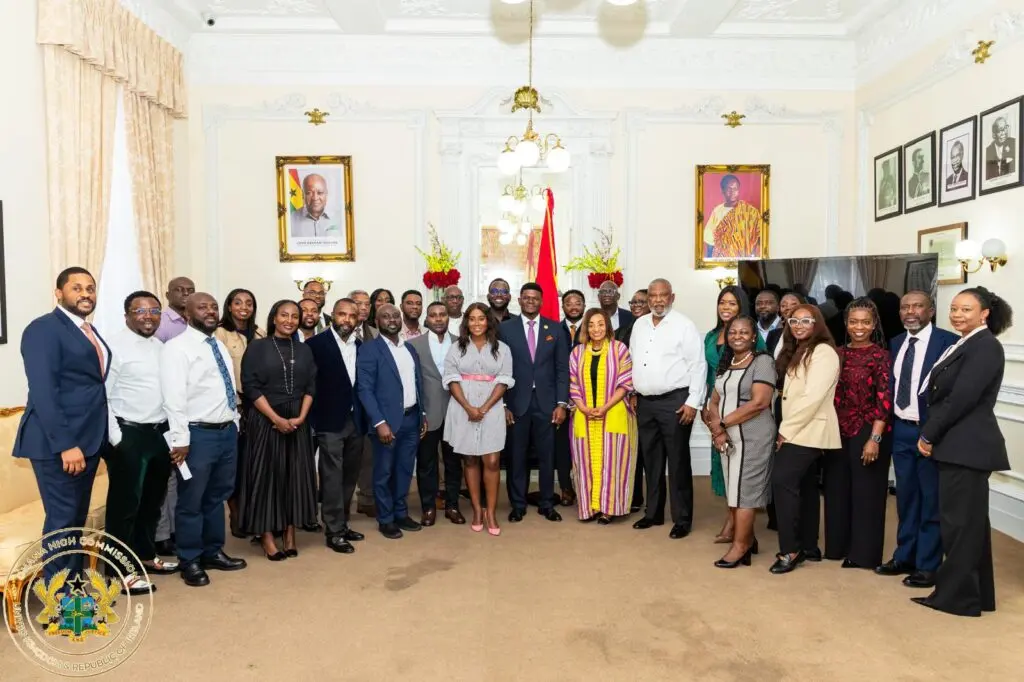
Ghana’s role as a continental trade hub was highlighted at the Asante Business Summit in London, where the country’s High Commissioner to the United Kingdom, Sabah Zita Benson, emphasized the strategic advantage conferred by hosting the African Continental Free Trade Area (AfCFTA) Secretariat.
AfCFTA Secretariat bolsters Ghana’s gateway role
Benson explained that the presence of the AfCFTA Secretariat on Ghanaian soil reinforces the nation’s position as a gateway to Africa. She framed Ghana not merely as a destination but as a platform for building, producing, innovating and expanding into markets across the continent and beyond. The remarks were delivered at a London International Leadership Roundtable organized as part of the Asante Business Summit, which gathered business leaders, investors and institutional representatives around the goal of converting Ghana’s potential into tangible economic opportunities.
Traditional leadership and private sector synergy
The High Commissioner underscored the importance of collaboration with traditional authorities, notably the Manhyia Palace. She noted that chieftaincy remains a source of identity, continuity and social cohesion in Ghanaian society, offering considerable opportunity when combined with government, private enterprise and diaspora strengths. Benson urged traditional institutions to provide local legitimacy and deep community connections, while the private sector contributes capital, innovation and commercial discipline. The diaspora, she added, supplies international networks, expertise and market access.
Kumasi and historic cities as centres of commerce
Focusing on regional dynamics, Benson highlighted Kumasi and other historic Ghanaian cities as long‑standing centres of commerce, entrepreneurship, craftsmanship and culture. She linked this legacy to the broader national ambition of becoming a stronger hub for regional investment, industry and innovation. According to Benson, success in Kumasi, Accra, Tamale, Takoradi, Ho, Sunyani or any other part of the country translates into national advancement.
Investment and economic diplomacy priorities
Describing Ghana as rich in human capital, natural resources, entrepreneurship, culture and creativity, Benson outlined sectors such as agriculture, manufacturing, infrastructure, technology, tourism and the creative economy as areas of opportunity. She stressed the need for investment that creates jobs, develops skills, strengthens Ghanaian businesses and expands competitive production capacity for domestic, regional and global markets. The High Commission, she said, plays a pivotal role through its Economic Diplomacy mandate, connecting investors with credible opportunities, linking Ghanaian enterprises with international partners and facilitating relationships that yield real projects.
Path forward for Ghana’s integration
Benson concluded by reaffirming her mission to complement the combined efforts of business, traditional, local and national leaders toward Ghana’s development. She emphasized aligning the strengths of traditional institutions, government, the private sector and the diaspora around credible projects and transparent structures to unlock substantial possibilities for the country’s economic future.